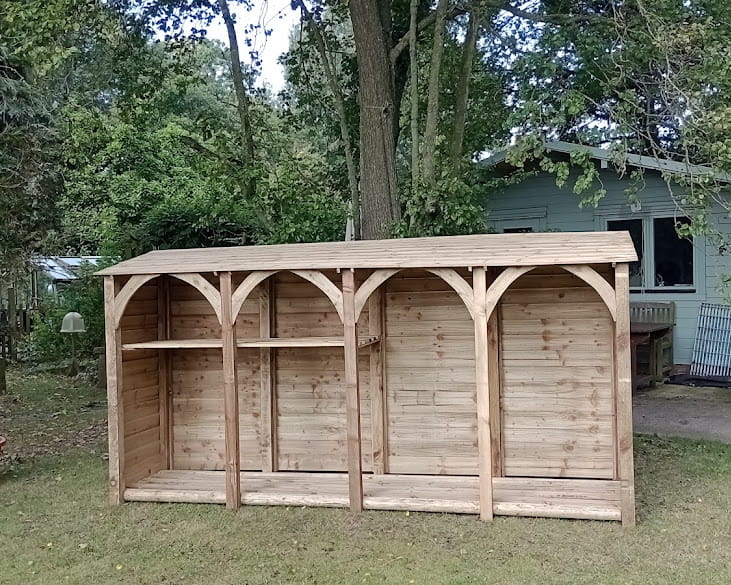
The science of log storage

Efficient log storage is more than just a matter of garden tidiness; it is a critical component of home heating efficiency and safety. For anyone relying on a wood-burning stove or an open fireplace, the method used for the storage of logs determines whether your winter nights will be spent enjoying a roaring, clean-burning fire or struggling with a smoky, hissing pile of damp timber.

​To get the most out of your firewood, you must understand the science of “seasoning”—the process of removing moisture from wood. Freshly felled timber contains significant amounts of water, often making up half of its weight. Without proper wood log storage,which includes Berkshire log stores.We make Wooden shelters for logs.This includes close board sides and back and adding a door to keep them dry.

 Log shelters are crucial

​When planning your log storage outdoor, the primary goal is to protect the wood from the elements while maximizing exposure to the sun and wind. So a log shelter is crucial.Water is the enemy of combustion, but air is the ally of evaporation.

​Choosing the Right Location

​The placement of your outdoor storage can shave months off the seasoning process. Ideally, you should position your stack in a sunny, south-facing spot. Sunlight provides the heat necessary to draw moisture out of the wood cells, while the wind acts as a natural dehumidifier.

​It is also important to consider proximity to your home. While you want the logs close enough for easy access during a cold snap, placing log storage directly against a house wall can sometimes trap moisture or provide a bridge for insects. A gap of at least a few inches between the storage unit and the wall ensures that air can circulate behind the wood.

​Ground Clearance and Airflow

​One of the most common mistakes in the storage of logs is stacking them directly on the earth. Soil is naturally damp, and wood is a porous material that will “wick” moisture upward from the ground. This leads to rot in the bottom layer of your stack. A professional outdoor store will always feature a raised base or a pallet-style floor to keep the wood off the ground and allow air to flow beneath the pile.

​Integrating Log Storage and Sheds

​For homeowners with limited garden space, the combination of log storage and shed facilities is a popular and practical solution. These hybrid structures offer a dual benefit: a secure, dry space for garden tools or machinery, and an open-fronted or slatted section specifically for firewood.

​The Benefits log storage and sheds

​A combined log storage and shed unit creates a centralized hub for outdoor maintenance. By sharing a footprint, you save valuable lawn space. However, it is vital that the “log” portion of the shed remains distinct from the “storage” portion.

  • The Log Section: Must be open or slatted to allow for constant airflow.
  • The Shed Section: Should be fully enclosed to keep tools dry and secure.

​Using a hybrid unit ensures that your seasoned wood is kept right next to your fire-starting tools, such as kindling, axes, and firelighters, making the process of prepping the evening fire seamless.

​Maximizing Vertical Space

​In smaller gardens, wood log storage often has to go “up” rather than “out.” Tall, narrow units that utilize vertical space can hold a surprisingly large volume of wood. When using a tall shed-style store, ensure the roof has a significant overhang to prevent rain from blowing into the stack.

​Best Practices for Wood Log Storage

​The way you arrange the wood within your store is just as important as the structure itself. To ensure your wood log storage is effective, follow these stacking rules:

​1. The “Bark-Down” Rule

​When stacking logs in an outdoor store, many experts suggest placing them bark-side down if they are on the bottom layer to prevent moisture from the wood being trapped, or bark-side up on the top layer to act as a natural rain shield. However, in a covered store, the orientation matters less than the density of the stack.

​2. Don’t Overpack

​It is tempting to cram as many logs as possible into your log storage unit to prepare for a long winter. However, packing logs too tightly prevents air from reaching the center of the pile. Leave small gaps between the logs to encourage cross-ventilation.

​3. Rotate Your Stock

​If you have a large amount of wood, practice the “First In, First Out” (FIFO) method. Always burn the wood that has been in your log storage outdoor the longest. Newer, greener wood should be placed at the back or in a separate bay to season while you use the older, drier timber.

​Why Quality Storage Matters for Your Home

​The financial and environmental benefits of proper log storage cannot be overstated. When you burn wood that has been stored correctly, you are using a carbon-neutral fuel source at its maximum efficiency.

  • Heat Output: Dry wood (moisture content below 20%) provides significantly more heat than damp wood. When you burn wet wood, much of the energy is wasted boiling off the water inside the log.
  • Chimney Safety: Burning damp wood from poor storage of logs creates thick smoke and “creosote,” a tar-like substance that sticks to the inside of your chimney. This is the primary cause of chimney fires.
  • Appliance Longevity: Modern eco-design stoves are finely tuned machines. Using logs from high-quality wood log storage prevents the glass from blackening and protects the internal firebricks from damage.

​Summary of outdoor Storage Shelters

​Whether you choose a dedicated slatted unit for log storage outdoor or a versatile wood storage and shed combo, the investment pays for itself in the quality of your fires. The goal is always the same: keep the rain off, keep the wood off the ground, and keep the air moving.

Log storage

Showing the single result