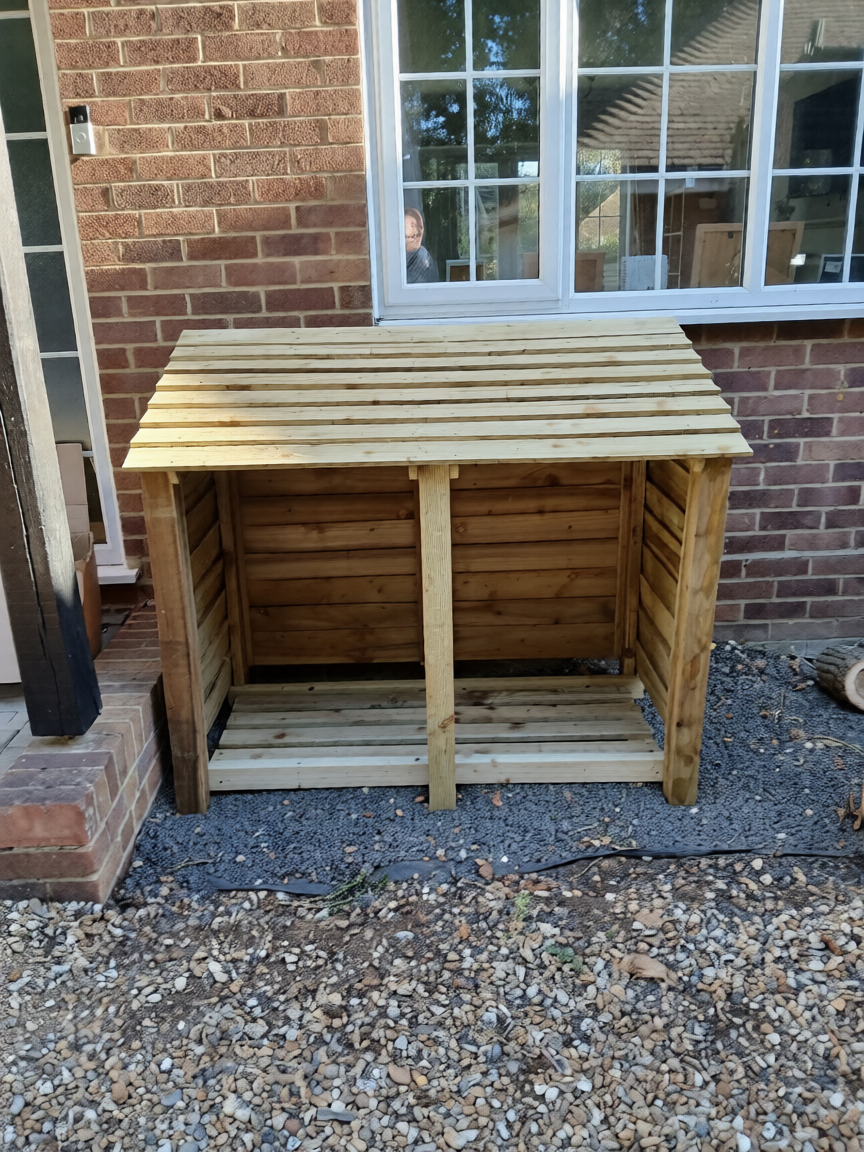
8 the main points for buying a Log Store
- look for a log store with good Airflow: A log store isn’t an airtight solid security shed; it relies on open slatted sides or gaps to let the wind carry away moisture.
- The 20% Rule: Burning wood with a moisture content above 25% is inefficient, makes alot of smoke, and is illegal in many regions due to pollution laws.
- Creosote Danger: Burning wet wood creates creosote, a tar-like substance that coats the inside of your chimney and is a leading cause of chimney fires.
- Off the Ground:my Log stores always feature a raised floor to prevent the bottom layer of wood getting wet and from absorbing dampness from the soil.
- Forward-Facing Slant: The roof of a log store should always slope forward or backward away from the stack to direct rainwater far from the wood. South Is Best: Positioning your log store facing south or the sun dramatically accelerates the natural seasoning process.
- Species Matter: Hardwoods (like oak and ash) take up to two years to season in a store, while softwoods (like pine) can be ready in as little as six months. Not Just for Drying: Even if you buy pre-dried “kiln-dried” wood, you still need a log store to prevent it from re-absorbing atmospheric moisture.
- Natural Pest Control: A good airflow and sunlight prevents insect investation and fungus from taking hold of your winter fuel supply.
- Bark Down, Split Up: Storing logs with the bark facing downwards allows moisture to escape from the split grain much faster.
The Anatomy and Necessity Log Stores
At first glance, a log store looks like a simple, rustic structure perhaps a glorified garden shed with a few missing walls. However, its design is a masterclass in passive engineering. The primary purpose of a log store is not just to keep wood dry from the rain, but actively to dry it out through a process known as “seasoning.” When a tree is freshly cut, it is packed with water, often holding up to 50% or 60% of its weight in moisture. Trying to burn this “green wood” is a frustrating and smoky endeavor. Instead of producing heat, the fire’s energy is wasted boiling off the internal water. A well-designed log store tackles seversl environmental elements: gravity, and solar heat and wind
Design of log stores
Slatted Sides: Unlike a tool shed, the walls of a log store have gaps between the timber slats. This allows air to circulate constantly through the woodpile, drawing moisture away from the logs. An Elevated Base: By raising the floor a few inches off the ground on pallets or treated timber bearers, the store prevents ground damp from seeping into the lowest logs and ensures air can circulate underneath the stack. An Overhanging, Sloped Roof: The roof keeps rain and snow off the wood. A forward or backward tilt ensures that runoff doesn’t drip directly onto the logs or pool at the base of the structure. The Science of Seasoning Wood Understanding how wood dries helps explain why log stores are shaped the way they are. Wood is made up of millions of microscopic tubes (called xylem) that transport water when the tree is alive. When wood is cut, water evaporates from the ends of these tubes much faster than it does through the bark. Because moisture escapes primarily through the cut ends, stacking logs in a way that exposes the grain to moving air is vital. If logs are packed too tightly or sealed in plastic sheets, the trapped moisture creates a humid microclimate. This leads to mold, rot, and a pile of wood that decays before it ever reaches your fireplace. Ideally, wood should be left in a log store until its internal moisture drops below 20%. At this point, the wood becomes clean-burning, highly efficient, and capable of producing maximum heat output (BTUs). Interesting Information: How fire wood burns
Wooden stores and Why Wet Wood is a Silent Hazard
When you burn wet wood, the water inside turns to steam. This steam mixes with unburnt gases and carbon particles, cooling the fire down. Because the fire is too cool to burn these gases completely, they travel up your chimney as dark smoke. As this smoke cools against the chimney walls, it condenses into creosote. Creosote is a highly flammable, black, tar-like substance. Over time, it builds up and can easily ignite causing a fire. By ensuring your wood is bone-dry via a proper log store, you virtually eliminate creosote buildup.Beware of sellers offering kiln dryer wood this often is not true and will cost you more money. Wood is hygroscopic, meaning it acts like a sponge, naturally absorbing moisture from the surrounding air. If you leave a crate of kiln-dried wood uncovered in a damp, humid garden, it will quickly absorb water and lose its premium quality. A log store is just as necessary for maintaining dry wood as it is for drying out green wood.
Location for a log store
Your wood stores location is Everything Where you place your log stores matters just as much as how it is built. The ideal location south or west-facing wall that gets a lot of sunlight throughout the day. It should also be placed in an area that gets a decent breeze, rather than tucked away in a stagnant, shaded corner of the garden. However, place your logstore near the house,carrying heavy logs through a wet garden is no fun.