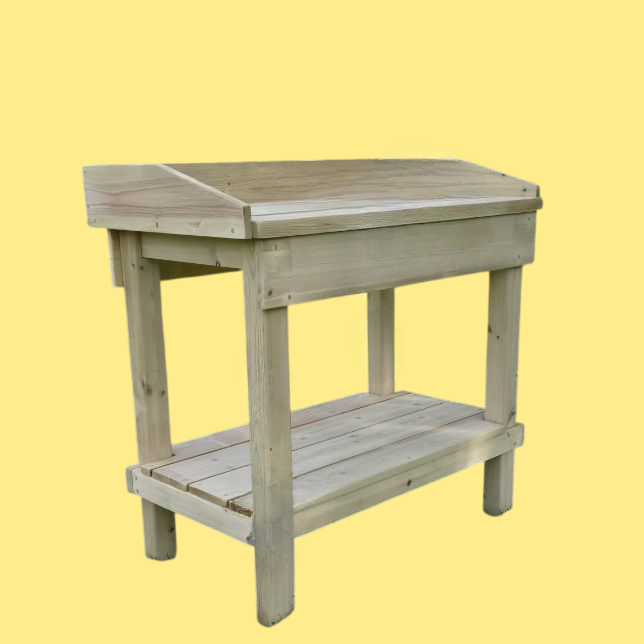
A good potting table (or potting bench) is a gardening workstation designed to make tasks like potting plants, sowing seeds, and transplanting seedlings easier and more organized. 🌱
Here’s what typically makes a well-designed garden potting table.
1. Comfortable garden seed table
A good potting table is usually around 90–100 cm high, which lets you work standing up without bending. This reduces strain on your back and knees when potting plants or mixing soil.
Why it matters
-
Keeps your posture comfortable
-
Allows longer gardening sessions
-
Makes repetitive tasks easier
2. Large, Easy-to-Clean potting table
The tabletop should be wide and durable so you can:
-
Fill pots with compost
-
Repot plants
-
Arrange seedlings
Metal or galvanised tops are popular because they’re easy to wipe clean and resistant to moisture.
Common materials:
-
Galvanised steel
-
Stainless steel
-
Treated wood
3. Storage and shelf’s for Tools and Supplies
A good potting table keeps everything in one place.
Typical storage features include:
-
Shelves for pots, watering cans, compost bags
-
Drawers for seeds, labels, and twine
-
Hooks or pegboards for tools like trowels and secateurs
This keeps the workspace tidy and efficient.
4. Compost Tray or Soil Bin
Many tables include a removable tray or recessed area for soil.
Benefits:
-
Contains mess while potting
-
Allows easy transfer of leftover compost back into bags
-
Makes mixing soil easier
5. Durable, Weather-Resistant Materials
Because potting tables deal with water, soil, and outdoor exposure, they should be made from materials that resist rot and corrosion.
Good options:
-
Pressure-treated timber
-
Cedar wood
-
Galvanised metal
6. Optional Helpful Extras
Some higher-end potting tables include features like:
-
Wheels for moving around the garden
-
Splashback panel to stop soil falling behind
-
Sink or drainage area for washing tools
-
Top shelf for staging plants or seedlings